
Para quienes se enfrentan al complejo panorama del cumplimiento normativo en materia de energía verde, el ISCC (Certificación Internacional de Sostenibilidad y Carbono) es un sistema de certificación de sostenibilidad reconocido a nivel mundial que verifica el abastecimiento sostenible, la trazabilidad y el rendimiento en materia de gases de efecto invernadero (GEI) de las materias primas y los productos a lo largo de las cadenas de suministro. Regido por la Asociación ISCC (ISCC e.V.), una entidad sin ánimo de lucro, el sistema permite a las organizaciones demostrar el cumplimiento de los requisitos medioambientales, sociales y de trazabilidad mediante una certificación independiente realizada por terceros.
El marco del ISCC comprende varios sistemas de certificación, cada uno de ellos diseñado para responder a necesidades específicas, ya sean normativas o voluntarias, del mercado:
En el marco del sistema ISCC de la UE, los combustibles renovables de origen no biológico (RFNBO) constituyen un ámbito de certificación específico para los combustibles producidos a partir de electricidad renovable, en lugar de biomasa. El sistema ISCC de la UE para los RFNBO se ha desarrollado con el fin de demostrar el cumplimiento de los requisitos específicos de sostenibilidad establecidos en la Directiva de la UE sobre energías renovables (RED III) y sus actos delegados.
Los RFNBO ( ) son combustibles sintéticos líquidos o gaseosos (como la e-gasolina, el e-metanol y el e-SAF) cuyo contenido energético procede de fuentes renovables distintas de la biomasa, como la energía hidroeléctrica, eólica o solar.
Regulada por la Directiva de la UE sobre energías renovables (RED III) y sus reglamentos delegados complementarios, la certificación funciona como un estricto «registro ecológico». Para obtenerla, un productor de combustibles sintéticos debe demostrar legalmente tres pilares fundamentales mediante auditorías independientes:
A medida que el hidrógeno renovable y los combustibles electrónicos cobran un papel fundamental en la descarbonización de sectores como la aviación, el transporte marítimo y la industria pesada, el programa RFNBO de la ISCC para la UE ofrece una vía de certificación reconocida que permite a los productores, comerciantes y usuarios finales demostrar el cumplimiento de los requisitos normativos europeos, al tiempo que proporciona garantías a los organismos reguladores, los inversores y los clientes en cuanto a la sostenibilidad e integridad de las cadenas de suministro de RFNBO.
¿Por qué es importante para el mercado el marco RFNBO de la UE de la ISCC?
Europa ha promulgado leyes vinculantes que obligan a las industrias y al sector del transporte a adoptar combustibles sintéticos. Por ejemplo, en virtud de la Directiva RED III, al menos el 42 % del hidrógeno utilizado en la industria europea deberá ser un RFNBO para 2030 (proporción que aumentará hasta el 60 % en 2035). Sin la certificación correspondiente, un combustible no se tendrá en cuenta a efectos de estas cuotas ni podrá comercializarse para cumplir con las obligaciones reguladas en materia de combustibles renovables en Europa.
Además, las entidades financieras y los inversores en infraestructuras ecológicas exigen una verificación rigurosa antes de respaldar proyectos de combustibles electrónicos. La certificación aporta pruebas de cumplimiento verificadas de forma independiente, lo que contribuye a reducir los riesgos normativos, de sostenibilidad y de trazabilidad en inversiones que requieren un gran volumen de capital.
Cada lote de combustible certificado que se entrega desde el proveedor al comprador va acompañado de un documento oficial de «Prueba de Sostenibilidad» (PoS). Este documento se registra en la Base de Datos Oficial de la Unión (UDB). Proporciona a los compradores corporativos datos matemáticamente irrefutables y auditados por terceros que pueden entregarse directamente a los auditores medioambientales y a las autoridades reguladoras. En virtud del Protocolo de Gases de Efecto Invernadero (GHG) y de la iniciativa Science Based Targets (SBTi), las empresas tienen severas restricciones a la hora de utilizar compensaciones de carbono baratas y no verificadas para alcanzar los objetivos climáticos. Dado que los combustibles RFNBO sustituyen físicamente a las moléculas fósiles dentro de la cadena de valor, se consideran una medida de mitigación directa:
Certificación RFNBO: cómo el HIF Haru Oni demuestra la viabilidad del e-Fuel
Tras dos años consecutivos de cumplimiento auditado de la normativa RFNBO, HIF Haru Oni sigue siendo la prueba fehaciente de que una economía de combustibles sintéticos basada en un ciclo cerrado e impulsada por energías renovables es técnicamente viable, comercialmente escalable y totalmente auditable.
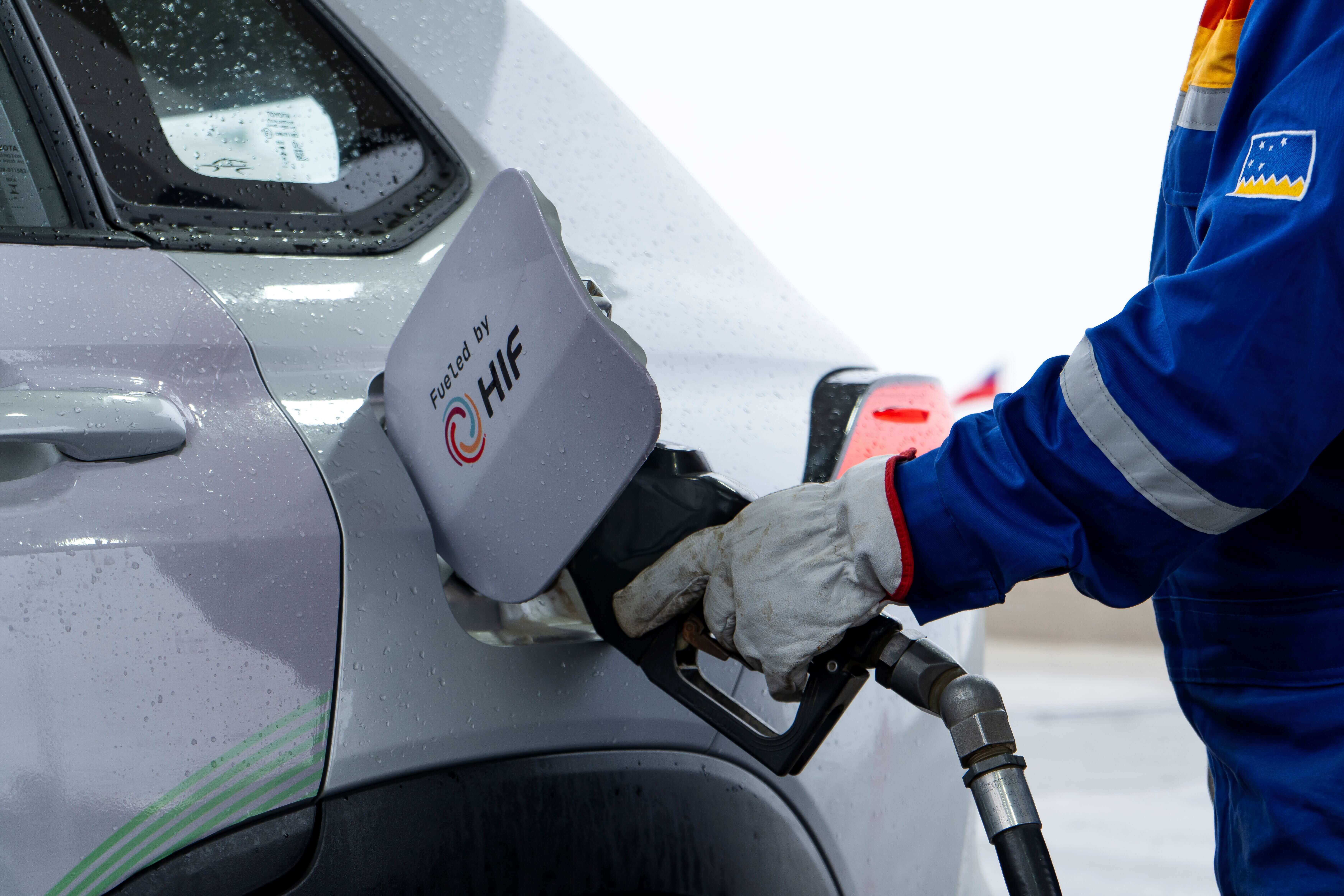
Se trata de la primera instalación fuera de la Unión Europea en recibir la certificación oficial ISCC EU RFNBO, y la primera del mundo en obtenerla para la producción comercial de e-gasolina. Validado por el marco ISCC, con sede en Alemania y aprobado por la Comisión Europea, este certificado abarca todo nuestro proceso de producción, desde la captura de carbono hasta la síntesis de hidrógeno verde, e-metanol, e-gasolina y e-LG.
Además, no se trata de un logro puntual. Al mantener con éxito este estricto estándar durante el ejercicio fiscal 2025/2026, HIF Global ha demostrado que el cumplimiento continuo y auditado es una realidad operativa consolidada.
Para los compradores de combustible, HIF Haru Oni constituye la base operativa de la creciente cartera de instalaciones a escala comercial que HIF Global está desarrollando en todo el mundo. A medida que se endurecen las cuotas internacionales, los compradores y las empresas de logística pueden asociarse con HIF Global con mayor confianza, sabiendo que nuestras moléculas sintéticas cumplen con los estándares legales y medioambientales más exigentes del planeta.
Póngase en contacto con el equipo comercial de HIF Global para analizar acuerdos de compra y oportunidades de colaboración estratégica.